Showing posts with label Victoria. Show all posts

Wednesday

The Glenrowan Inn

The Glenrowan Inn site of the Kelly Gang siege in 1880
This photograph shows the burnt remains of the Jones's Hotel, the scene of the final confrontation between Ned Kelly and the Victorian Police.
A sign still stands: "The Glenrowan Inn, Ann Jones, best accommodation".
Source: State Library Victoria
Taken by John Bray 1880

This is where Ned Kelly, dressed in home-made plate metal armour and the infamous helmet, was captured and sent to gaol.  Dan Kelly, Joe Byrne, and Steve Hart were with him and also had suits of armour.

I do not say what brought me to Glenrowan, but it seems much. Anyhow I could have got away last night, for I got into the bush with my grey mare, and lay there all night. But I wanted to see the thing end. Part of Ned Kelly's statement to the press.

The Glenrowan Inn, owned by Ann Jones, was burned to the ground by the police after the Kelly Gang siege in June 1880.

See also: The Demise of the Kelly Gang

Saturday

Melbourne in the 1800's

early Melbourne in the 1800's

Detail from the Cyclorama of Early Melbourne by John Hennings
 
In 1892, the Victorian government commissioned John Hennings to paint a cycloramic painting of Melbourne. Hennings was paid 500 guineas (about A$1000) for his work which took five months to complete.
A cyclorama was a pictorial entertainment that was popular in Europe and America from the late 18th century until the arrival of cinema at the end of the 19th century.
Hennings was born in Germany in 1835 and arrived in Australia in 1855.

Tuesday

Australia's population during gold rush years

Australia during gold rush years
Prospector's Hut, Upper Dargo, Gippsland, Victoria, Australia in 1870.

During the gold rush era between 1850 to 1870, Victoria dominated the world's gold output.
Australia's population increased dramatically mainly due to the gold discoveries with people trying to 'strike it rich'. In 1851 the Australian population was 437,655 and 10 years later it had grown to 1,151,947.

Find out more about the gold rush in Australia.

Saturday

Aboriginal guides

black trackers
Portrait of 'John Piper', an Aboriginal tracker
who accompanied Major Thomas Mitchell in his expedition across the Great Dividing Range.

Aboriginal guides, or black trackers, as they became known, were used to track down bushrangers. A group assisted the Victorian Police in tracking down Ned Kelly in 1878 and 1880.
"The volunteer 'black trackers' from Fraser Island and Cape York, employees of the Queensland Native Police who tracked Ned Kelly, were lured by a promise of a cut in £8,000 reward offered for Kelly's capture. After the Glenrowan showdown with Kelly and his gang in 1880, Jack Noble (Wannamutta) and Gary Owens (Werannabe)25, along with 92 others, applied for the reward. Sums were set aside for Noble and Owens and paid to the Queensland Government, but despite repeated requests the men never received their money. The men were placed in confinement camps with their families because they could not show visible means of support when they retired." From the Australian Government site


Ned Kelly's trial

trial of Ned Kelly
"Ned Kelly in the Dock - A Scene from Life" Ned Kelly in the dock during his trial.
Wood engraving published in The Illustrated Australian News.

On the 28th and 29th of October, 1880 at Melbourne Kelly was tried for the murder of Constable Thomas Lonigan at Stringybark Creek. He was found guilty and sentenced to death by hanging.

The one piece of evidence that may have helped Kelly, the Jerilderie letter, was made inadmissable. "It passionately articulates his pleas of innocence and desire for justice for both his family and the poor Irish selectors of Victoria's north-east." Read more at State Library of Victoria.


 Ned Kelly trial
The trial of Ned Kelly, wood engraving, published in The Illustrated Australian news, Melbourne, David Syme and Co. November 6, 1880. Source State Library of Victoria, Illustrated newspaper file. Illustrated Australian news.
For more interesting facts about the trial go to Trial of Ned Kelly on Ned on the Net.

The case was considered unusual at the time as Kelly spoke directly to the Judge Justice Redmond Barry which was not heard of.

Kelly's speech at the trial at Kelly Gang and Friends Inc.

You may be interested in:
Demise of the Kelly Gang
Ned Kelly's trial
The infamous Ned

Sunday

Gold mining town Walhalla, Victoria.

Gold mining town Walhalla, Victoria1863

Walhalla, a small town in Victoria,  Australia, was  founded as a gold-mining community in early 1863.  The town's name is taken from Valhalla from the Vikings.
The first gold was found in Victoria in 1851, which lead to the Victorian gold rush.

A group of prospectors who had been exploring in creeks flowing into the Thomson River valley found gold sometime during late December 1862 or early January 1863. A claim was pegged out and a member of this group, former convict Edward Randel, registered the claim at the outpost town on Bald Hills on 12 January under his assumed name, Edward "Ned" Stringer. Although he was presented with a monetary reward of £100 for his discovery, Stringer was unable to capitalise on his finds, dying in September 1863. Although the settlement was soon rechristened Walhalla after an early mine, the creek running through town still bears his name.

The rush that inevitably followed news of this find was slowed to some extent by the goldfield's remote and inaccessible location, but many miners soon found their way there. In February 1863, John Hinchcliffe discovered an immensely rich quartz reef in the hill just above the creek, which he named Cohen's Reef, after a storekeeper at Bald Hills. Cohen’s Reef - yielded over 50 tonnes of gold, making Walhalla one of Victoria’s richest and most vibrant towns, and home to thousands: with hotels, shops, breweries, churches, school, jail and its own newspaper.

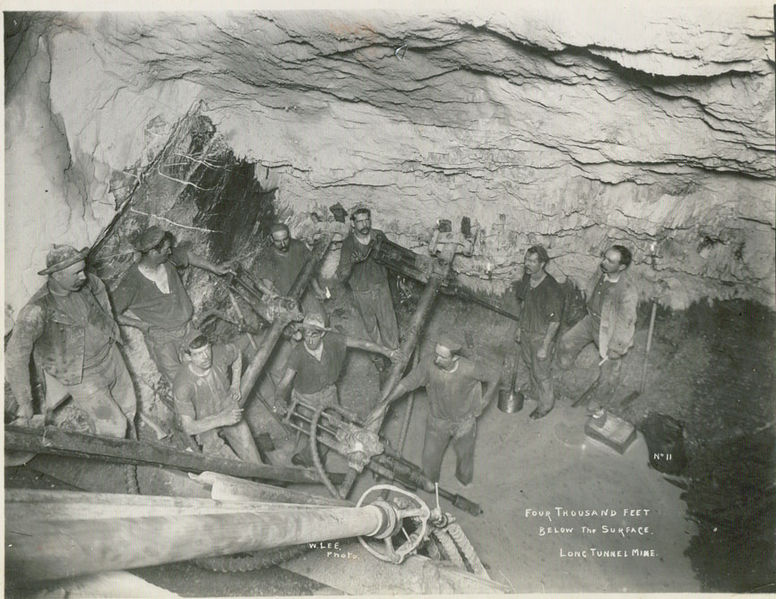
The picture above is of the Long Tunnel Extended Gold Mine (LTEM) which was one of the richest mines of Walhalla.  This mine was the second most productive mine in the area (after the Long Tunnel) and in total produced 13,695 kg of gold until it closed in 1911.

Saturday

Owen Hargrave Suffolk "The Convict Poet"

Owen Hargraves Suffolk bushranger

Owen Hargrave Suffolk was born April, 4th 1829 in Middlesex, England. His father was William Johnson Suffolk and his mother was Ann.  He was born into a middle class family and was both well spoken and literate. In the 1841 England census an older child was in the same house as Owen named William.

Owen Hargrave Suffolk was transported to Victoria, Australia in 1847, on the Joseph Somes, for petty crime in the County of Middlesex:
7 years for Forgery of an Order of the payment of money with intent to defraud Robert Wilson; also for unlawfully obtaining 2 sovereigns, 1 half-sovereign, 1 crown, 1 half-crown, 2 shillings, and 1 sixpence, and other monies, of Robert Wilson, by false pretences*

He wrote many poems including those about prison and bushranging e.g. For Frank Gardiner, (below) and was dubbed 'The Convict Poet'.

Suffolk spent more than sixteen years in colonial goals. He was incarcerated in both England and Australia for a total of 5 terms but this never seemed to deter him from leading a life of crime. When he finally returned to London he continued in his life of crime - he became a bigamist, faked his own death and escaped to America with a widow's money. In March, 1867, he married a widow, Mary Elizabeth Phelps. In 1880 he married Eliza Shreves.

"For Frank Gardiner.

It is not in a prison drear
Where all around is gloom,
That I would end life's wild career,
And sink into the tomb,
For though my spirit's ever bold
Each tyrant to defy;
Still, still, within a dungeon cold,
I could not calmly die.

It is not that my cheek would pale
Within a lonely cell;
It is not that my heart would quail
To bid this world farewell.
For if oppressed by tyrant foe
I'd freely be the first
To give my life, and strike the blow
To lay him in the dust.

But place me in a forest glen
Unfettered, wild and free,
Wtih fifty tried and chosen men
A bandit chief to be.
'Tis there, when fighting with my foes
Amid my trusty band,
I'd freely leave this world of woes,
And die with sword in hand. "


He started writing  his autobiography in 1858, describing his life as bushranger, horse thief, prisoner and con man, called Days of Crime and Years of Suffering, published in 1867.

RESOURCES:
1841 England Census about Owen Suffolk
England & Wales, Criminal Registers, 1791-1892
England & Wales, FreeBMD Marriage Index, 1837-1915 about Owen Hargrave Suffolk
Convict Records of Australia
* The proceedings of The Old Bailey from 1674 to 1913

Monday

Happy Jack

Jack John Gilbert bushranger
Wood engraving of John Gilbert
by Eugene Montagu Scott,
held at the State Library of Victoria, Australia.

John Gilbert was born in Canada in 1842 to William John Gilbert (1797 – 1879) and Eleanor Gilbert nee Wilson (1802 – 1845).
He arrived at the Victorian goldfields in 1852 together with nine members of his family to search for gold.
At the age of 12 he left home to work as a stablehand for his sister Eleanor and husband, John Stafford, and he became a good horseman and was called "Happy Jack" due to his good disposition.  He later went to the Kiandra goldfields in New South Wales.
By 1862 he was robbing stores and coaches with Frank Gardiner, the bushranger. He participated in the gold coach robbery at Eugowra.
When he was shot and killed, in 1865, he had a 1000 pound reward on his head and had been involved in around 630 hold ups including the death of a police man.

Read the story of his death.

Friday

Fossicking for gold in Australia in the 1800's

WA goldfields
Western Australian Museum ExploreWa GoldfieldsGetting Gold
 
Victorian Gold rush


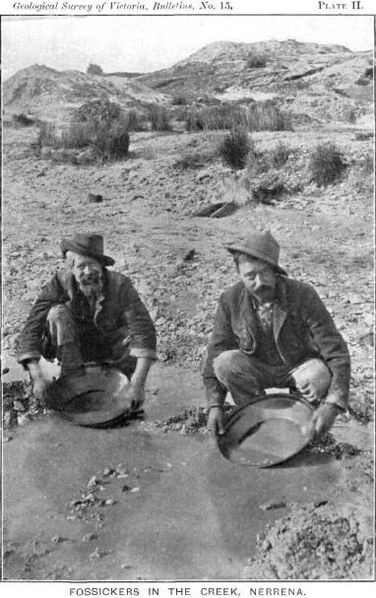
Fossickers at the creek at Nerrena, Victoria during the gold rush.
 
Goldrush days  Australia
Early Goldrush days in Coolgardie, Western Australia
via The Mining Chronicle
Gold miners outside a bark hut, Queensland, ca. 1870 Two gold miners dressed in working clothes outside a slab bark hut
with mining tools nearby.
 
TIMELINE OF AUSTRALIAN GOLD RUSH ERA
1851: Ballarat and Bendigo, Victoria
1852: Beechworth, Victoria
1858 - 1859: Bright, Omeo, Chiltern,Victoria
1863: Walhalla, Victoria
1872: Palmer River Gold Rush, Palmer River, Queensland
1893: Kalgoorlie, Western Australia
1896: Coolgardie, Western Australia


Thursday

ROBBERY UNDER ARMS

painting Bushrangers on the St Kilda Road
William Strutt the artist who painted this scene in 1887, Bushrangers on the St Kilda Road, described it as "one of the most daring robberies attempted in Victoria" in 1852.

The St Kilda Road was the scene of frequent hold-ups during the Victorian gold rush by bushrangers. During the gold rush a temporary camp was set up for new arrivals and it was called Canvas Town.  It was in the part of St Kilda Road between Canvas Town and Melbourne that most hold ups occurred. The bushrangers, who conducted the holdups, were thought to be mostly former convicts from Van Diemens Land which is now called Tasmania.

Find out more background to the art work PDF
Related Posts Plugin for WordPress, Blogger...